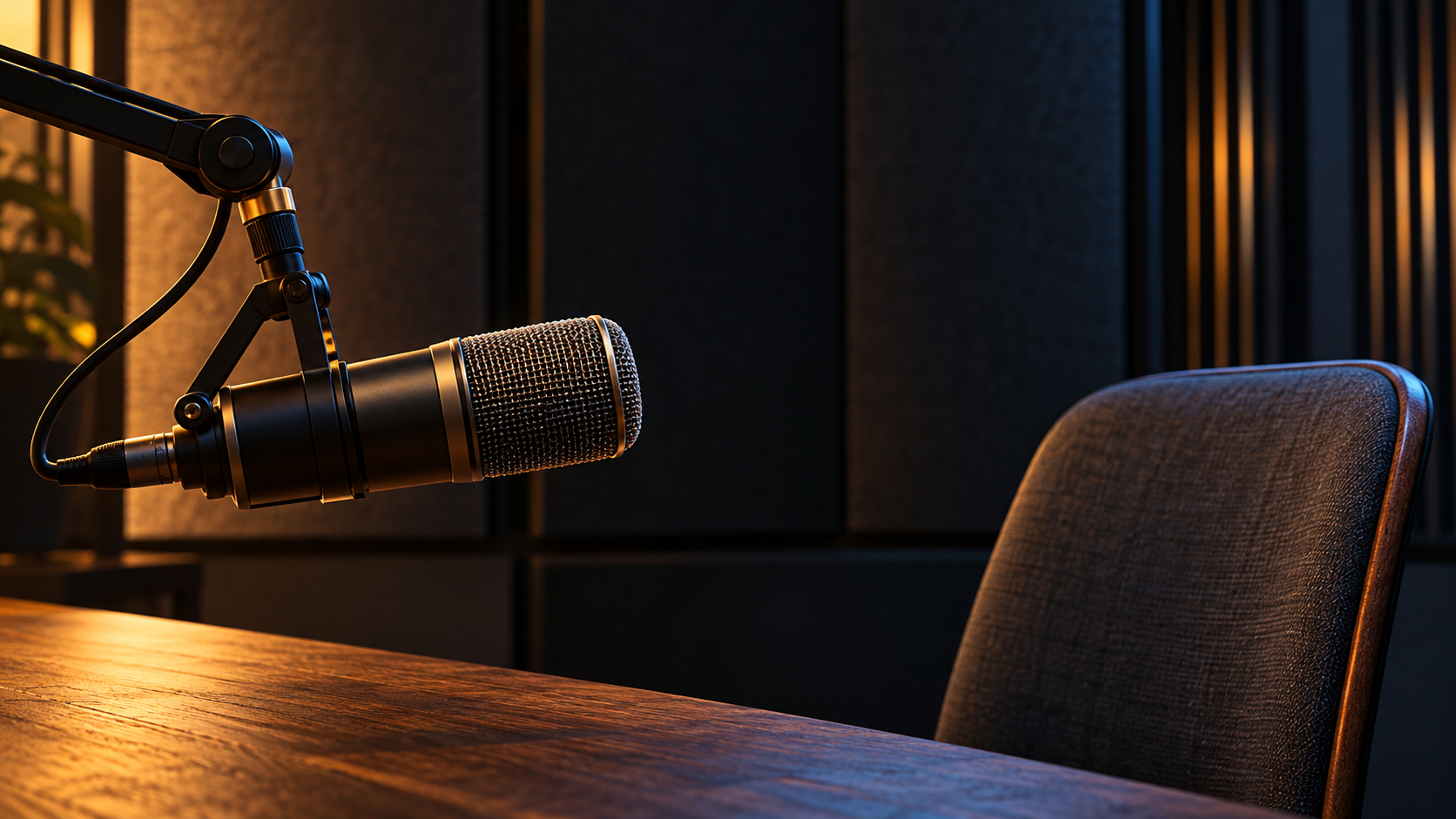
Pops would explain why he sat a certain distance from the microphone. I watched where he put himself, then listened to his voice through the monitors.
For a kid, the microphone was an interesting object before it was anything else. He helped me understand that how you used it mattered. Where you sat, how you spoke, what the recording sounded like: those were things to pay attention to.
He talked about Shure microphones, too. He liked how good and reliable they were. I remember that confidence in the equipment. It was part of the way he explained the work to me.
I am not trying to reconstruct an exact setup now. I do not remember every model or setting, and I would rather leave those details open than give the memory equipment it may never have had.
What I remember is him taking the time to explain. I could ask why the microphone was there, or why he was sitting where he was, and he would make the answer understandable.
Then he spoke. His voice came back through the speakers clean and warm. The things he had been explaining were part of that sound. I could listen for them, even before I had the language to describe much of what I was hearing.
Those visits gave me an interest that has lasted. I still like finding out what a microphone hears and what a recording keeps. I like the small changes you can notice when you listen carefully.
Pops taught me to look at the setup, but he also taught me to listen to the result. That is the part I keep returning to.