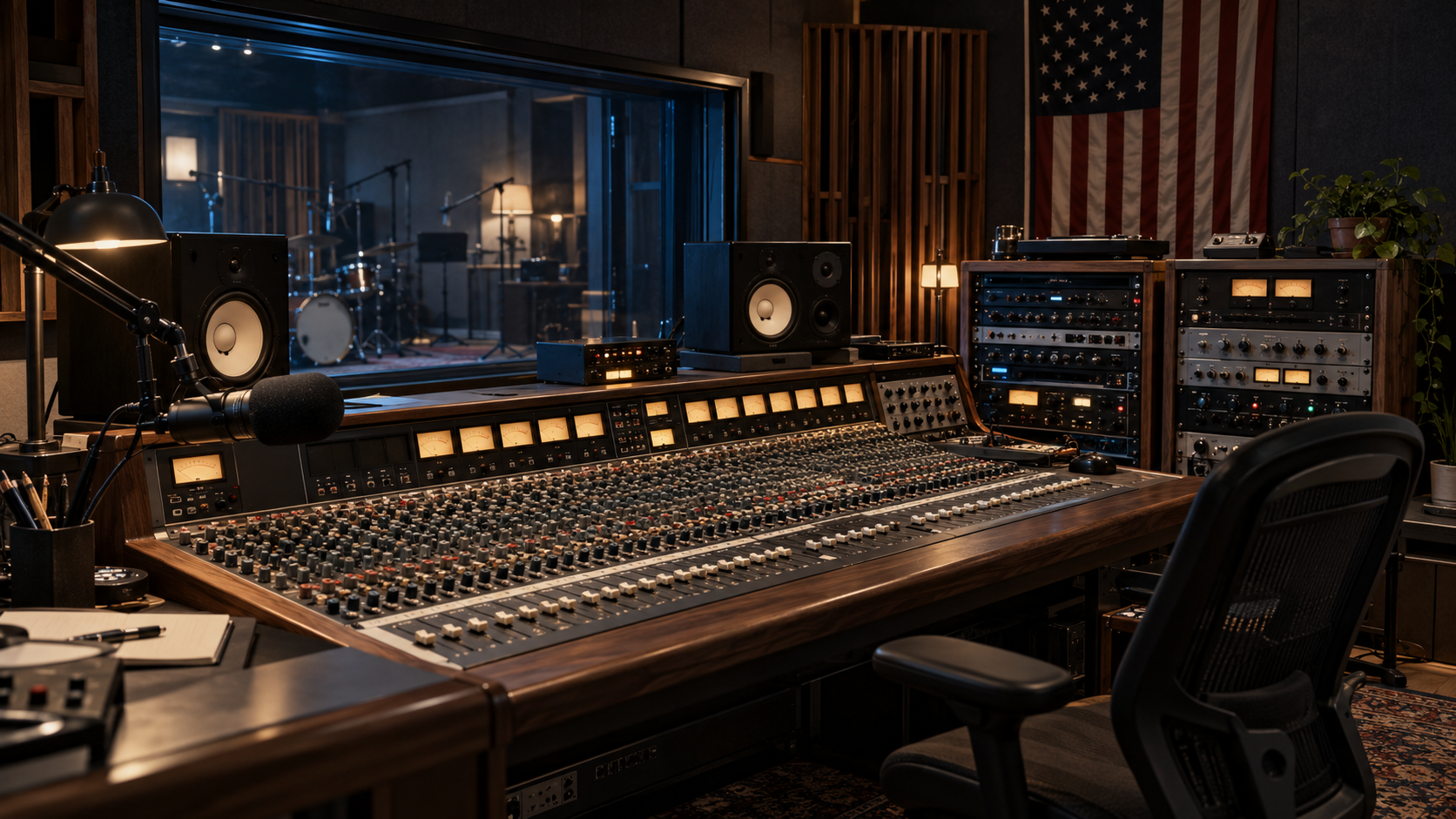
I don't remember Pops needing another take because he'd made a mistake.
If he recorded something again, it was usually because he wanted a different feeling, or the engineer thought they could get a better one. He already had the words. He was paying attention to how they reached somebody.
That still fascinates me.
He could be telling a story or talking with someone who'd called the radio station. There was a steadiness to him. He didn't race toward the end of a thought. You had time to follow him.
People talked about his voice. How full it was. How naturally he seemed to belong on the radio. I heard that too, but I also got to ask him how he did it.
He'd explain the distance between him and the microphone. Why that distance mattered. Why he trusted a good Shure. Then we'd get into speakers, the cones inside them, or what tubes did to the sound.
I was a kid. An answer like that could keep me busy for a while.
But I wanted to try the voice part myself.
He'd tell me to use my belly, to feel the vibration instead of doing everything with my mouth. That was how he put it to me. And when I tried, he wasn't going to pretend I'd gotten it just to make me happy.
“That ain't it, son. Practice some more.”
I love that I remember those words.
He took the questions seriously. He'd explain something, let me try, and tell me when I still had work to do. The gear was fascinating, but being there with him was what made me want to learn.
When he told me people would respect me if I thought before speaking, he was talking about more than recording. I can see that now.
A microphone can pick up every word. It takes a little more care to give someone a reason to stay with them.
That's what I want in my own recordings. Something clear, something comfortable to listen to. And enough room for the thought to arrive.