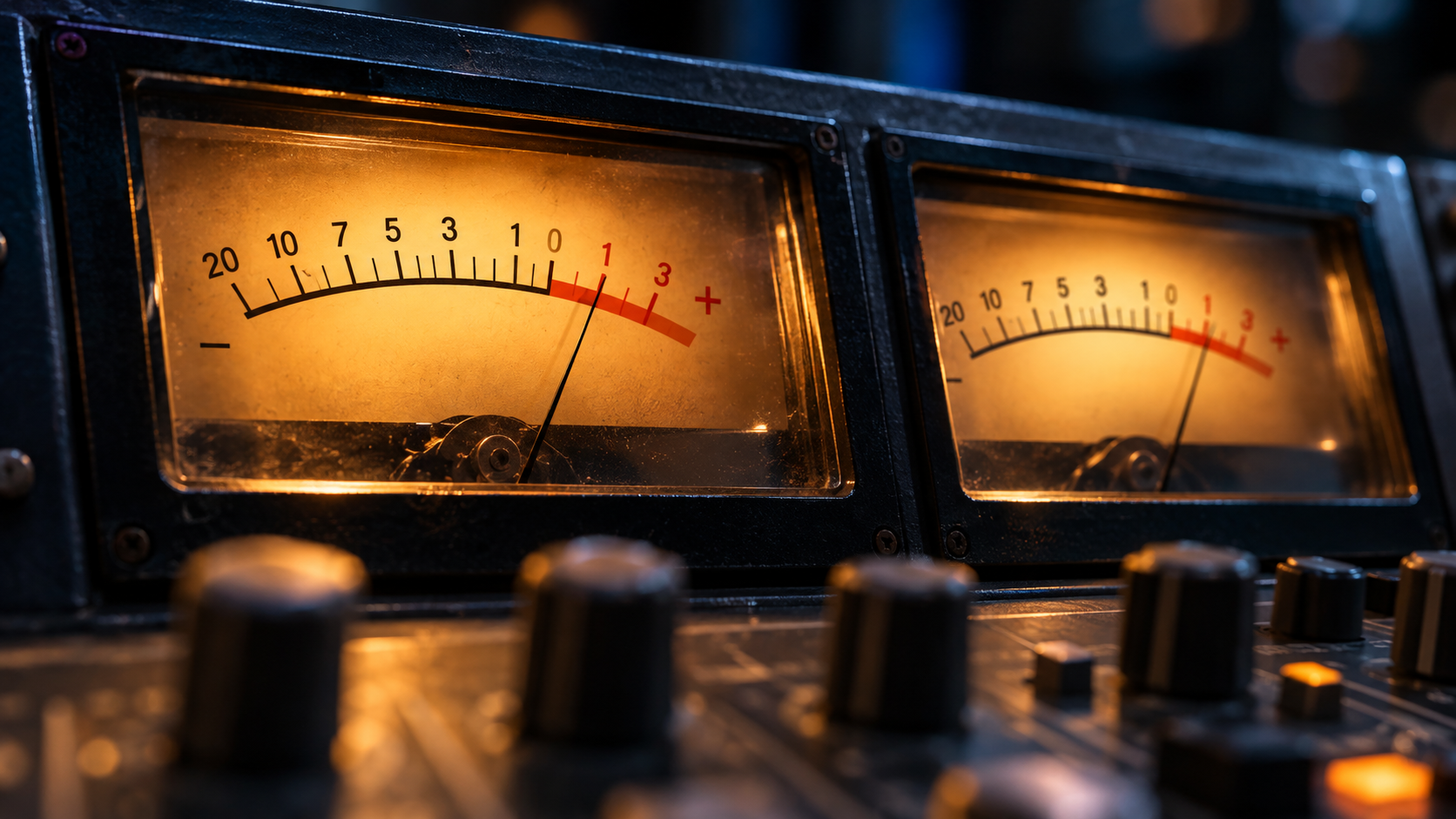
When Pops took me to the studio, I would watch the VU meters as he spoke. The needles moved with his voice. I did not need to understand the equipment to find that fascinating.
I would point at them and ask what they were doing. He explained gain in a way a kid could follow: how hot the signal was. Too hot, and the recording would have to be done again.
There was more to understand, of course. He gave me enough to keep watching and enough to ask another question.
Then I would hear him through the studio monitors. His voice was comfortably loud, clean, and warm. I knew that voice outside the studio, but hearing it come back through the speakers gave it another presence in the room.
I could watch him speak and watch the equipment respond. The microphone, the moving needles, the sound coming back: I wanted to know how those things belonged together.
Pops would explain. Microphones, speakers, cones, tubes. Sometimes one answer led into a subject I had not thought to ask about yet. I was interested in the technology, and he made it something we could talk about.
I remember the warmth of his voice as clearly as the fascination with the gear. There was comfort in hearing him that way. The recording equipment could have seemed distant or complicated. With him there, I could point at something and find out what it did.
That is part of what I carry into my own interest in sound. I want to hear the details, and I want to understand the path a voice takes before it reaches somebody else.
A meter gives you something to look at. A familiar voice gives you a reason to keep listening.
When I think of those visits now, I still picture the needles moving. I remember who was speaking.