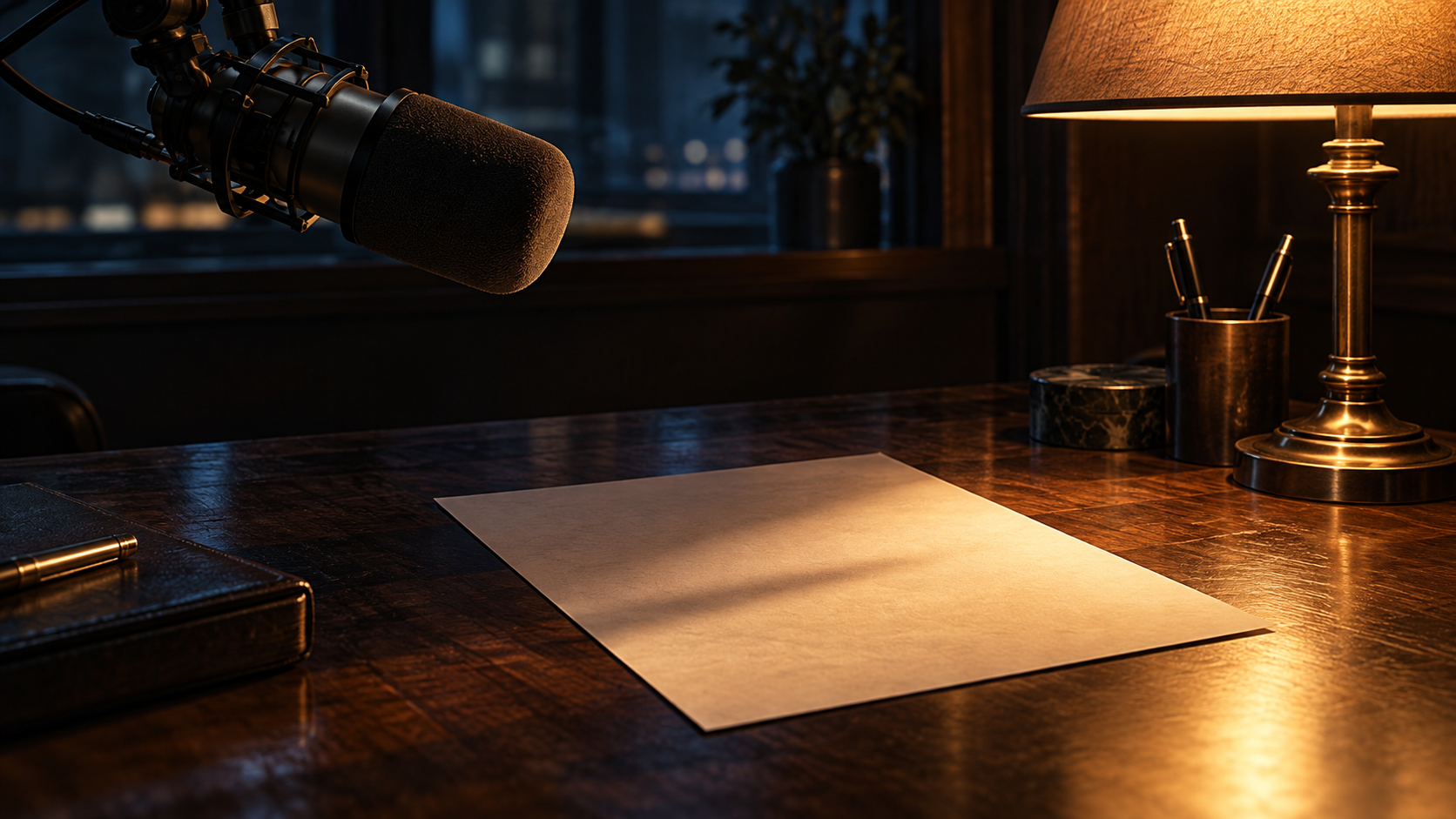
Pops never liked a rushed cadence. When he told a story or talked to someone calling the radio, he spoke in a calm, controlled way. I watched that, and I listened.
People mentioned his voice. Warm, full, masculine. They said he was a natural. What I remember alongside those descriptions is the care in how he spoke.
He gave me advice I have carried for years: “Think before you speak, son.” He told me it would pay off in the long run and that people would respect me.
As a kid, I was interested in the sound of his voice. I wanted to know how he got it. He would explain, let me try, and tell me when I had not found it yet.
“That ain't it, son. Practice some more.”
There was no shortcut in that answer. Trying once did not mean I had learned what he was doing. I had to keep paying attention.
I think about his advice differently now. Thinking before I speak can mean choosing the right detail, deciding how direct I need to be, or giving somebody's question a moment before I answer it.
A pause does not have to be elaborate. Sometimes it is just enough time to hear the question properly. Sometimes it keeps the first reaction from becoming the whole reply.
That matters to me in teaching, too. I want a conversation to have room for thought. There are times to be quick and playful, and times when a more considered answer is what the person needs.
I still admire the warmth of Pops's voice. I also remember the patience behind the delivery. He could let a sentence take the time it needed.
His advice has stayed useful. I hear it when I am about to answer too quickly.